

Bojan Ivanc je glavni ekonomist GZS, direktor Inštituta za strateške in gospodarske raziskave d.o.o. (ISGR d.o.o.), član NS NLB Skladi, član sveta CMSR (Center za mednarodno sodelovanje in razvoj) ter podpredsednik CFA društva Slovenija. Njegove naloge so oblikovanje gospodarskih napovedi ter podpora GZS pri socialnem dialogu, nacionalnih in sektorskih politikah. V preteklosti je delal kot finančni analitik v dveh bankah. Je reden kolumnist Dela in Financ, objavlja pa tudi članke v Bančnem Vestniku, strokovni reviji za bančništvo. Je član strateškega sveta za makroekonomska vprašanja
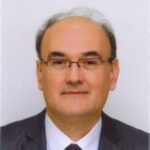 Aleksandar Rodić graduated in 1985 at the Faculty of Mechanical Engineering, University of Belgrade and received master and doctoral degrees from the Faculty of Electrical Engineering, University of Belgrade, in 1992 and 1998, respectively. Since 1987, he is with the Robotics department of Mihjalo Pupin Institute, Belgrade, whose Head of department currently is and vice-president of the Institute’s Assembly. He was elected a scientific advisor in 2009. Professor Rodić’s primary research interests are in the fields of robotics, control engineering, artificial intelligence, remote operated intelligent systems, smart agriculture, etc. He is a visiting professor at the University of Révinion (France) 2004-2014 and at the University of Technology in Anhui (Republic of China) from 2014-2019. He is a professor of Doctoral Studies at the Faculty of Electrical Engineering in Belgrade and is a member of the Advisory Board for Electronics, Telecommunications and Information Technology in the period (2011-2016) as well Mechanical Engineering and Industrial Software (2017-2026) with the Ministry Science, Technological Development and Innovation of Republic of Serbia.
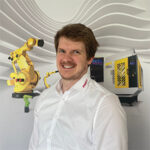
Gašper Muhič je prodajni inženir v podjetju FANUC Adria d.o.o., kjer se osredotoča na rešitve s področja CNC tehnologije in digitalizacije proizvodnih procesov. Sodeluje s podjetji na področju CNC obdelovalnih strojev, robotskih sistemov ter uvajanju IoT platform. Z vpeljavo naprednih proizvodnih tehnologij pomaga izboljšati učinkovitost, sledljivost in stabilnost proizvodnje

Marko Grilc je inženir industrijske avtomatizacije, strojnega vida in kontrole kakovosti z več kot 15 leti izkušenj. V podjetju INEA je vodja ekipe za strojni vid in vodja projektov. Njegove izkušnje na domačem in mednarodnem trgu obsegajo tako razvojne kot komercialne projekte. Med drugim je vodil projekte implementacije kontrole kakovosti katalitičnih nanosov s strojnim vidom za proizvodno multinacionalko z več kot 50 lokacijami, razvoj celice za strojni vid z rentgenskimi žarki ter preverjanje površinskih napak na plastičnih kosih s pomočjo umetne inteligence.

Marta Dziarnowska combines an analytical background with strategic market expertise to identify and engage top-tier beneficiaries for manufacturing projects funded by the European Commission. Holding a PhD in social sciences, she applies rigorous research methodologies and data-driven planning to map complex industrial markets and pinpoint high-value project partners. With extensive experience in European projects, Marta bridges the gap between EC frameworks and the manufacturing industry through expert stakeholder management. Her ability to lead teams and develop targeted dissemination strategies ensures not just the identification of beneficiaries, but the successful cultivation of long-term partnerships.
Sales Manager – HIPROJECT d.o.o.
Experienced Sales Manager with more than 17 years of experience in sales of technological equipment and project management across various industrial sectors:
– Heat treatment and automation – over 8 years of experience in this field (working now)
– Photovoltaic sector – 3 years (working in the past)
– Waste-to-energy sector – 3 years (working in the past)
– Smart and complex building management – 3 years (working in the past)
Education: University Degree in Economic Engineering (University of Maribor)
E-mail: [email protected]

Tomas Petrovič je elektroinženir in direktor podjetja Tokrun. Posveča se razvoju sodobnih tehnoloških rešitev ter prinaša nov vpogled v razvoj robotike. S svojim delom povezuje inženirsko natančnost, inovativno razmišljanje in razumevanje prihodnjih izzivov avtomatizacije. S tem kvalitetami tudi vodi podjetje v smer hitrega in učinkovitega reševanja problemov.
Tomas Petrovič is an electrical engineer and CEO of Tokrun. He is dedicated to developing modern technological solutions and brings new insights into the development of robotics. His work combines engineering precision, innovative thinking, and an understanding of future automation challenges. With these qualities, he leads the company in the direction of quickly and efficiently problem solving.